Finding a crack in a wall can cause real worry, and the word subsidence gets used for almost any movement in a house. In practice most cracks come from settlement, shrinkage or thermal movement, which are normal and usually cosmetic. Subsidence is a specific problem where the ground beneath the foundations moves downward, and it needs a different response. This guide explains the difference so you can decide whether you are looking at filler and paint or something that needs a proper investigation.
What settlement means
Every new building, and every new extension, compresses the ground under it slightly as its weight comes on. That happens mostly in the first few years and then stops. It can leave hairline cracks, especially where new work meets old, around door frames and at plaster joints. Once the building has settled, those cracks stay the same size and can be filled and decorated.
What subsidence means
Subsidence is the ground under an existing foundation shrinking, washing away or collapsing, so that part of the building drops. Common triggers are clay soils drying out, often because of nearby trees drawing moisture, leaking drains softening or washing out the ground, and old mine workings. Unlike settlement, subsidence can continue or recur, and cracks may widen over time.
Other causes of cracks
Plenty of cracking is neither. New plaster shrinks as it dries. Timber floors and roofs move with humidity through the seasons. Long runs of brickwork expand in summer and contract in winter. Rusting steel or iron embedded in walls can push masonry apart. These all produce cracks that look alarming but have nothing to do with the foundations.
- Fine cracks in fresh plaster: shrinkage
- Cracks that open and close with the seasons: thermal or moisture movement
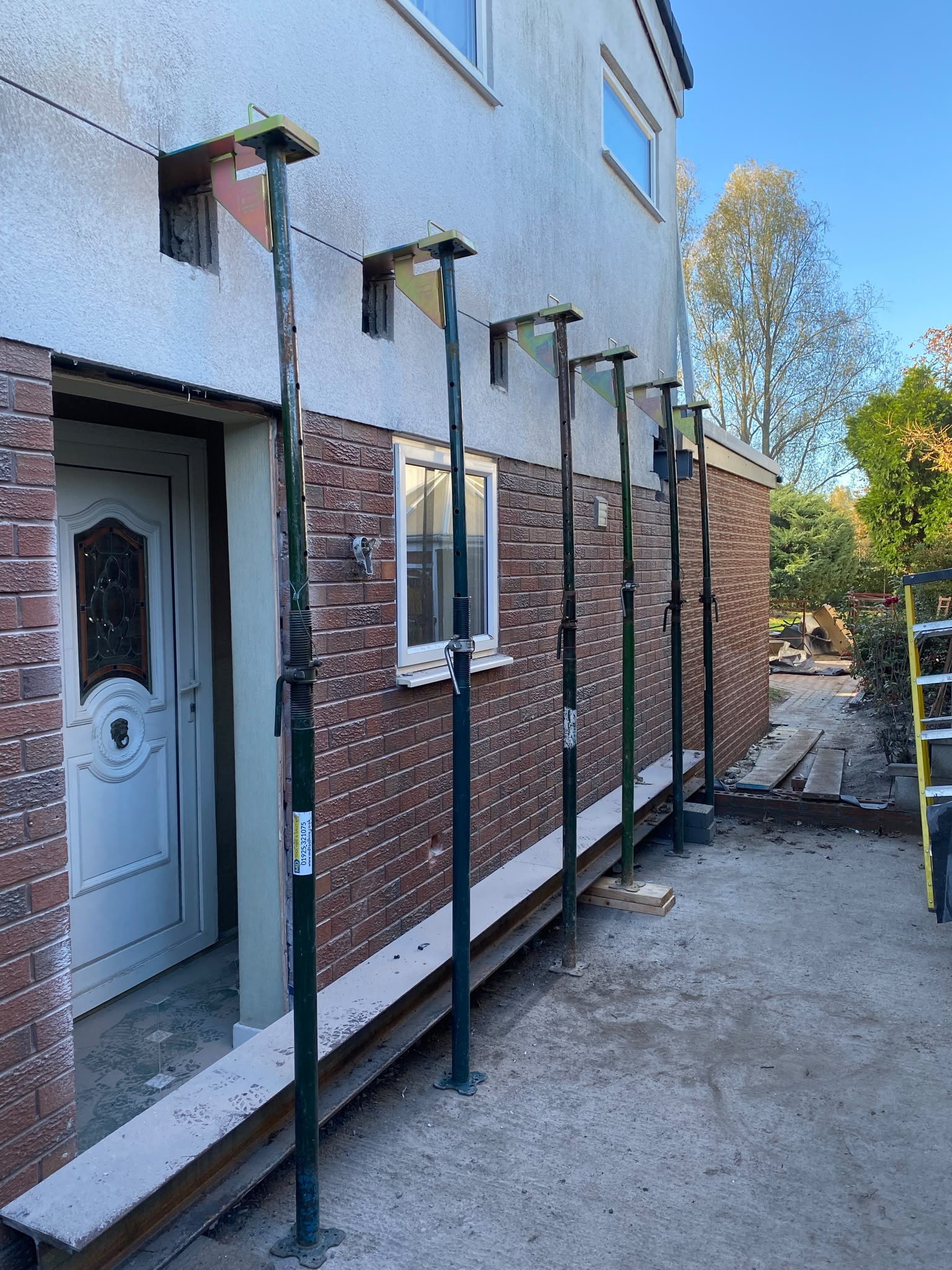
- Cracks over a newly formed opening: check the lintel or beam
Signs that point towards subsidence
The warning signs are cracks wider than a few millimetres, cracks that are wider at the top than the bottom, diagonal cracks running from the corners of doors and windows, and doors or windows that suddenly start sticking. Cracks visible both inside and outside on the same wall, or ones that keep growing after being filled, are also worth taking seriously. None of these proves subsidence alone, but together they justify a closer look.
Monitoring before acting
A single look rarely settles the question. The usual approach is to mark the ends of a crack and record its width with a simple gauge or a dated pencil line, then check every few weeks through a change of season. A crack that stays stable is very unlikely to be active subsidence. One that keeps widening needs investigation, often starting with a drain survey and a check of nearby trees.
Who to involve
If you suspect subsidence, contact your buildings insurer early, because most policies cover it and insurers usually want to appoint their own investigators before any repair. A structural engineer can assess the cause and advise whether underpinning, drain repair or tree management is needed. A builder carries out the agreed repair, but should not be the one diagnosing subsidence alone.
Where we come in
We regularly see cracking during refurbishments and extensions, and part of every site visit is noting what we find and giving an honest view of whether it looks like settlement or something that needs an engineer. Where cracks are cosmetic we can repair them properly, raking out and re-pointing or re-plastering rather than just smearing filler over the top. Where they are not, we will say so and suggest the next step.