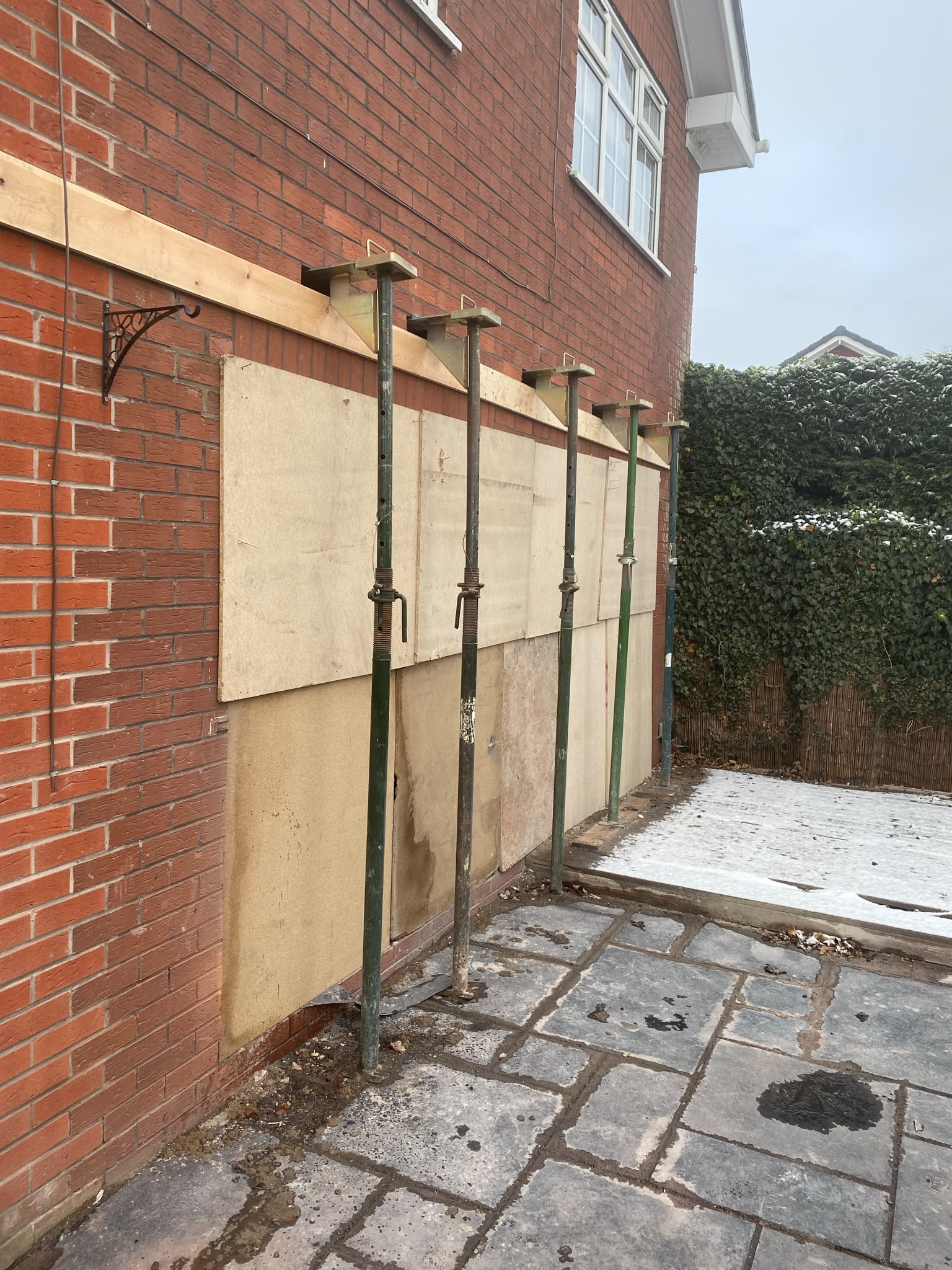
Fine cracking after structural work is common as loads redistribute and plaster dries. Cracking that widens, steps through brickwork or appears alongside doors that suddenly stick is a different matter and deserves a proper look.
Normal settlement cracking
Hairline cracks at plaster joints, along the line of new and old work, and around beam encasement typically appear in the first months and are a decorating issue rather than a structural one.
Signs worth investigating
Cracks that are wide enough to insert a coin, that step diagonally through mortar joints, that continue to grow, or that come with sloping floors or binding doors.
- Diagonal stepped cracking through brickwork
- Cracks that widen over weeks
- Doors or windows that begin to bind
- Visible deflection in a ceiling line
Usual causes on domestic work
Inadequate bearing, missing or undersized padstones, propping removed too early, or an opening formed without a designed structural solution.
Putting it right
It starts with an engineer's assessment. Remedial work can mean adding proper bearing, additional support or, in some cases, replacing the structural member correctly.