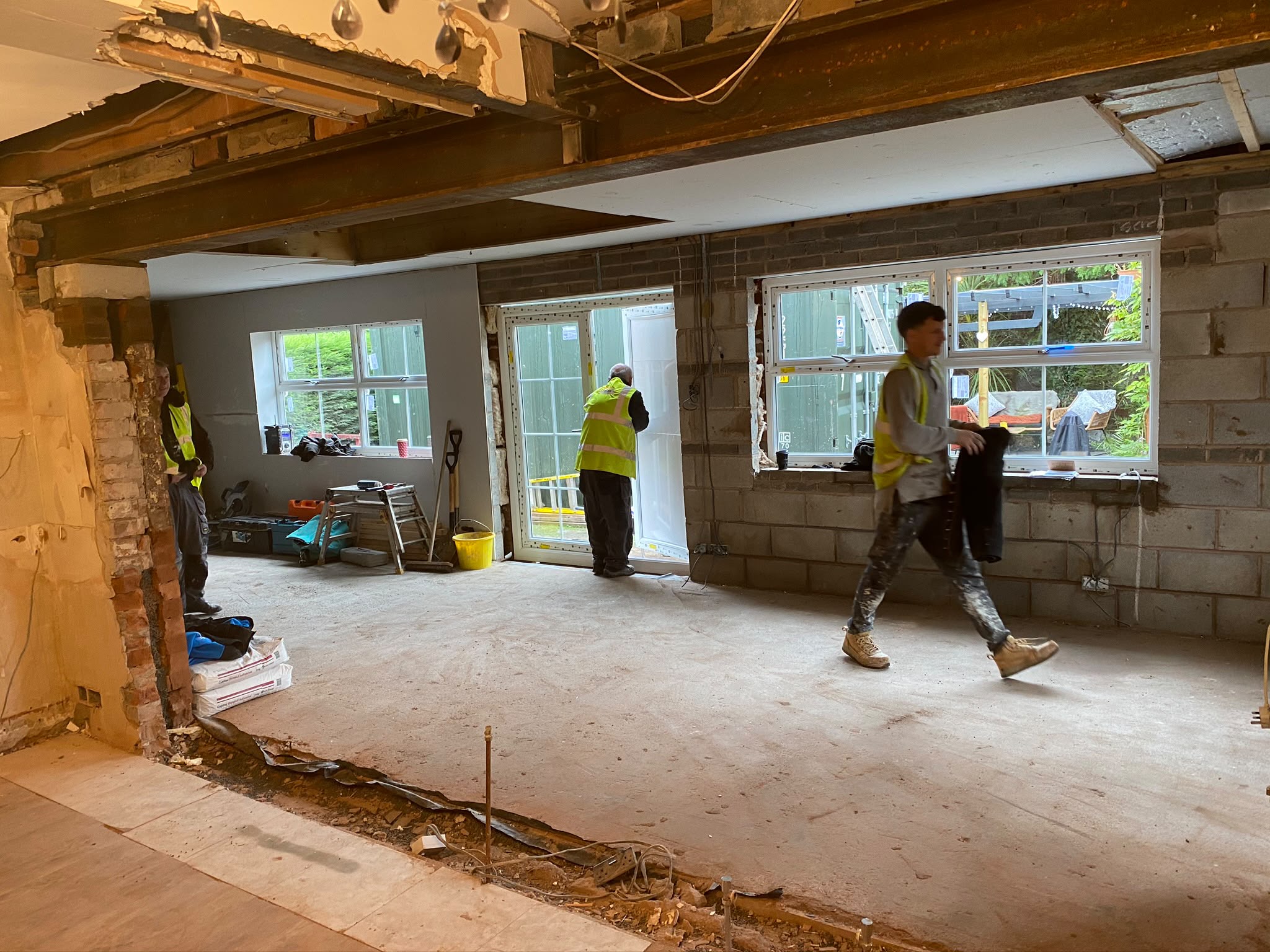
A ceiling that reads level before a wall comes out and dips afterwards is telling you something about the structure now carrying that load. It is worth understanding before it is skimmed over.
Deflection is designed for, not eliminated
Every beam deflects slightly under load. Engineers design within limits so that movement is not visible or damaging. Visible dipping suggests the limit has been exceeded or the design was not followed.
Common causes
An undersized section, joists hung or bearing incorrectly, missing packing at bearings, or a beam installed without the connections the design called for.
What can be done
Options range from additional support or a supplementary beam through to replacing the member. The right answer follows an engineer's assessment, not a guess.
Cosmetic repair alone is a mistake
Re-boarding and skimming a dip hides the symptom while the cause continues. Establish the structural position first.