Blades Building LtdBLADESBUILDING
Problems & repairs

Condensation and cold spots in a new extension

New buildings hold a lot of water, but persistent condensation has other causes.

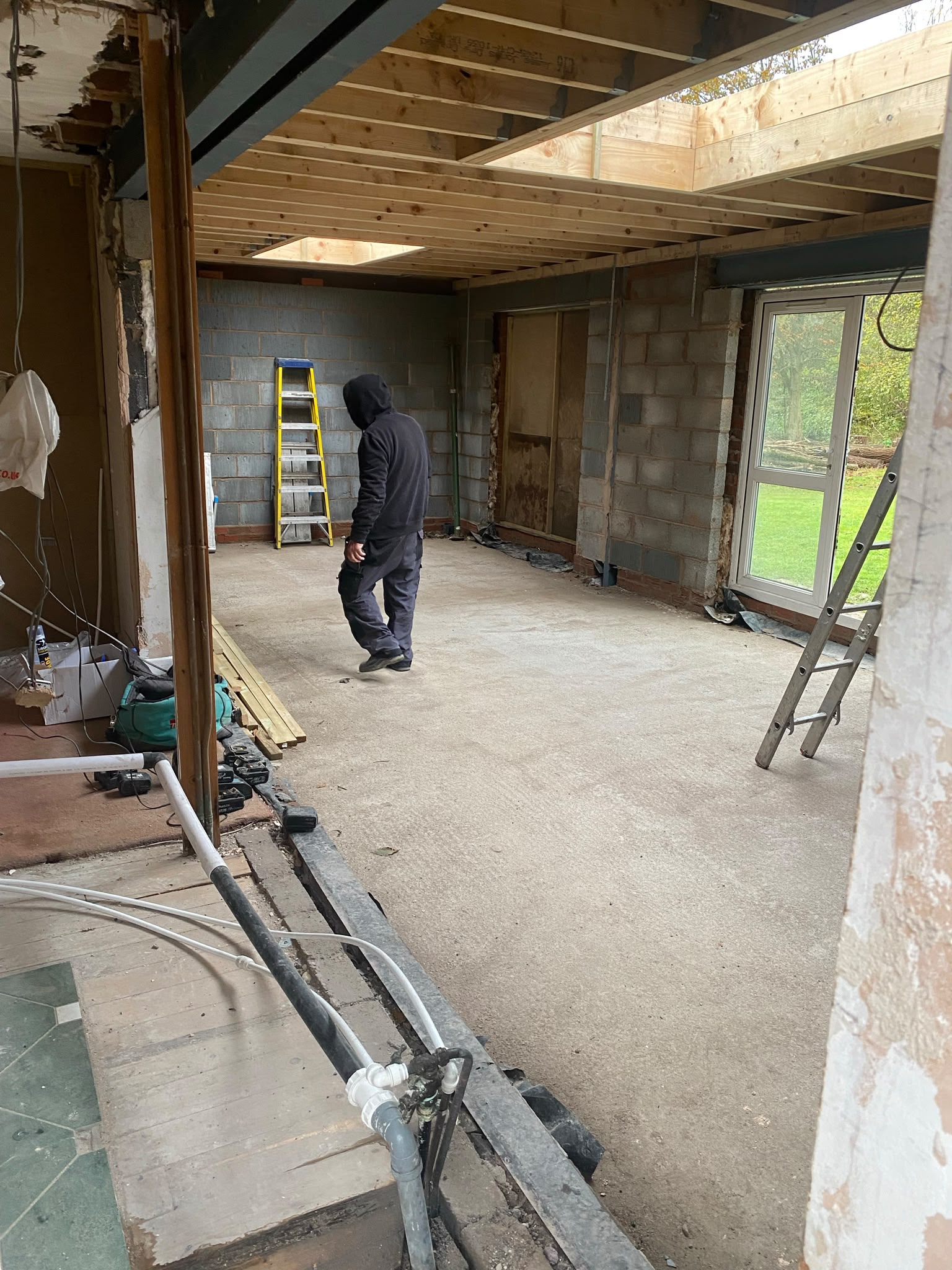
A new extension holds a great deal of construction moisture in concrete, blockwork and plaster, and takes months to release it. Condensation that continues past that period usually points at ventilation, glazing or a cold bridge.

Drying out

Expect elevated humidity in the first months. Ventilating and heating steadily, rather than sealing the room up, helps it dry without cracking finishes.

Cold bridging at junctions

Where insulation is interrupted — at the wall-to-roof junction, around openings, or at the threshold — surfaces run colder and attract condensation locally.

Glazing and rooflights

Large glazed areas are the coldest surfaces in the room and will show condensation first, particularly on still, cold nights with high internal humidity.

Ventilation strategy

Trickle vents, extract in wet rooms and a habit of purge ventilation matter far more in an airtight new build-up than they did in the draughty original house.

Common questions

Questions we get asked about this

How long does drying out take?

Several months is normal for a masonry extension, and heating and ventilating steadily through the first winter helps considerably.

Is condensation on the glass a defect?

Internal condensation on the coldest surface on a cold night is usually a humidity and ventilation issue rather than a fault in the unit.

Can cold bridges be fixed after completion?

Sometimes, depending on location. It is far cheaper to detail them out during construction.

Will underfloor heating solve it?

It helps surface temperatures but does not replace ventilation or correct a cold bridge.

Extension not performing?

We will look at the detailing and the ventilation and tell you what is actually going on.